Marketing will be the most important area of expertise for the next generation of business leaders, according to 29% of surveyed business executives.
Source: Institute of International Research (June 2005).
Bring the best of both worlds together – Sales and Marketing. Sales is the act of selling products or services, and it’s Marketing that gets you in the door. They work together.
Saturday, September 10, 2005
Marketing for the Next Generation

Marketing Metrics
For a PDF of this document, click HERE. Just as important as creating a strong marketing plan is following through on the results.
Why Measure? If a company doesn't identify and track important performance measures, it increases its risks.
Defining Metrics:
· Measurements are the raw outcome of a quantification process, such as a company's numbers, ratios, and percentages.
· Metrics are the standards for measurement, providing target values that a company must achieve to reach a certain level of success.
· Benchmarks are the best measurements to aspire to, the standard by which all others are measured. Companies that set benchmarks in their industries are the ones often lauded in "Top ten" and "Most Admired" lists and articles.
Determine the Metrics Needed to Measure Your Company’s Performance:
Compile a list of factors that are important in your industry. Criteria may include:
· Marketing: sales growth; market share; distribution methods; sales force size, effectiveness and training; advertising budget and effectiveness; inventory levels, delivery time; product quality; customer retention rates
· Production: plant capacity, locations and age; age of equipment; ability to expand capacity; skill and turnover of labor force; union relations; quality control; supplier retention; raw material sources
· Administrative: employee turnover, age of facilities
· Management: experience, depth and turnover of top, middle and supervisory managers; effectiveness of communication systems; access to information; cohesiveness of top management ranks; compensation plans; decision-making speed; strategic planning ability
· Technology/Research and Development: age of R&D facilities; age of production technology; production patterns; basic innovation; engineering abilities; experience of R&D team; R&D budget; R&D project timelines
Three Important Metrics Gauges:market share, lifetime value and brand equity.
Four key performance indicators enable you to address market share:
· Customer growth rate
· Share of preference
· Share of voice
· Share of distribution.
The following performance indicators will help you drive these penetration-related metrics:
· Frequency and recency of purchase
· Share of wallet
· Purchase value growth rate
· Customer tenure
· Customer loyalty and advocacy
DEFINITIONS OF MEASUREMENTS and METRICS
Acquisition Cost
The cost of a single response to a promotion or total cost divided by total number of responses.
Brand Awareness
If you ask 1,000 manufacturing managers whether they've heard of your brand, the result will indicate your penetration into the minds of prospects.
Brand Preference
What percent of those who are aware of your brand, prefer your brand over your competitors?
Brand Image
What percent of those who are aware of your brand feel positive (preferred, obviously) or negative about your company and your products?
Brand Loyalty
A measure of the degree to which a buyer recognizes, prefers and insists upon a particular brand; brand loyalty results from continued satisfaction with a product considered important and gives rise to repeat purchases of products with little thought but with high-involvement.
Cost of Servicing Customer
A measure of all of the actual costs, administrative, etc., associated with servicing a specific customer.
Customer-Acquisition Metrics: Key acquisition metrics include the following:
· Awareness levels
· Purchase-decision drivers
· Rate of customer acquisition
· Market share
· ROI of marketing programs
· Cost of customer acquisition
Customer Defection
The rate at which customers are lost and the reason(s) why.
Customer-Retention Metrics: Improving customer retention remains one of the most effective ways to drive profits to the bottom line. Marketers want customers not only to continue using products on an ongoing basis but also to buy other products and services. Current customers are also vitally important in spreading positive word-of-mouth, which attracts new customers. By turning loyal customers into advocates, marketers can significantly reduce customer acquisition costs and significantly increase the value of current customers. Some key customer retention metrics include:
· Retention rate
· Abandonment rate
· RFM (recency, frequency, monetary value)
· LTV (lifetime value)
· Brand equity
· Net promoter score -The net promoter score measures the difference between customers who spread positive and negative word of mouth about your product.
Improved Customer Relationships
Happier customers can represent a return on investment. This can be gauged through repeat order patterns, by a change in the number of complaints, compliments, or through customer surveys comparing pre- and post-project satisfaction.
Lifetime Value (LTV)
Total anticipated revenue collected from a given customer. Lifetime values can be measured for: Donors, Customers, Clients. Current Sales (or Donation) x estimated customer life
Media Mentions
Product mentions or appearances per medium per month and whether those mentions were positive or negative. Number of press releases, pieces of mail, number of new customers, number of web hits or visitors, awareness changes (or the extent to which people are more aware of your product), impressions (number of articles in the press multiplied by the potential readership of each publication), content analysis, recall measures, and on and on.
Referrals by Customer/per Customer
A measure of the number of customers willing to refer new customers and number of referrals by each customer.
Return on Investment (ROI)
ROI is a computation that tells you how much you received compared to what you put into a project. You can express ROI in terms of a dollar amount ($) or as a ratio (%).
The dollar amount formula ($) tells how much you increased profit in total dollars as a result of the project: (Cost savings and earnings as a result of the project) minus (Dollars invested)
The ratio formula (%) tells how much you got back, in dollars, for each dollar you invested in a project: (Cost savings and earnings as a result of the project) divided by (Dollars Invested)
Sales
For a Commercial Measure: Increase in sales volume.
For a Rehab Measure: Social impact of person working in CRP versus not working (tax payer savings, less gov’t reliance, etc.) or the “Doing Well while Doing Good” Factor
Sales Per Customer
Number of sales made by a given customer in a given time frame
Measuring promotion strategies as to which work and which do not:
The following can be used to measure success:
1. Asking. Everyone who makes an inquiry to your company should be asked how he/she found out about your organization. The various order and inquiry forms should collect this data that are periodically analyzed and then used in marketing planning.
2. Coding. Code every piece of marketing material, especially direct mail, to track success.
3. Surveys. Compare pre- and post-project satisfaction.
4. Internet. On your web site, a counter can be incorporated to keep track of the number of “hits” or visits to the site. A guest book can also be included on the web site to get more information and leads on potential customers. E-mail inquiries and on-line orders can also be tracked. Track messages received via alias emails to analyze web traffic and web-site click-thrus.
NOTE: To be effective, track components of marketing separately within the company’s accounting system: direct mail printing costs, postage costs (not invoices), ads (not job classifieds), seminars/training, etc.
RETURN ON INVESTMENT (ROI) TOOL
Measure the cost per piece, cost per new customer, and more.
Use this tool to test different sets of assumptions to see how your program results might vary with different response rates and different conversion rates.
Divide your customers into three: current users (your biggest asset), lapsed users (particularly important if you are losing market share) and potential customers (your source of growth).
To make a simple calculation for the ROI you need the following information:
(A) The total costs of the campaign
(B) The total number of direct mail pieces (newsletters)
(C) The response rate from the newsletters (what percent of the people who got your direct mail, for example, clicked through to your site?)
(D) The conversion rate (what percent of those who clicked through actually bought something
(E) The average amount of sales per person who bought something based on the direct mail.
The ROI = ((B*C*D*E)-A)/A
You can refine this figure by actually calculating the exact amount of sales from all the people who bought something that came from the direct mail campaign (use this number instead of (B*C*D*E).
Monday, September 05, 2005
Sales and Service: Can't We All Just Get Along?
I have to share this from Michelle Nichols...I could have written it myself! Those who sell tend to forget that they are only as good as their customer-service teams. That's a costly blunder, but one so easy to avoid I love being in sales. It's hard to beat the emotional high of finally closing a big deal. But signing any contract is like a wedding. Like any lasting relationship, the real work -- and profit -- comes during the course of the many years that follow the exchange of "I do's." In many companies, this job belongs to the customer-service department, which is responsible for the care and feeding of the customers, and whose job it is to respond to the occasional "whoops!"
Customer-service teams are all too often unsung heroes -- and that lack of recognition is just plain crazy. If you increase sales by 10%, but simultaneously lose the same percentage of clients due to lousy customer service, all your latest selling efforts would be for naught. You might just as well have stayed home in bed!
Savvy business owners encourage their sales and customer-service departments to work together. This strategy keeps customers happy, maximizes revenues and profits, and also makes for a more pleasant work environment. These were some of the points that came to mind when I recently adressed a conference of sales people and customer-service reps.
Here are my suggestions on how the teams can work together to maximize results:
For salespeople:
• Respect. In many outfits, the way customer-service professionals are treated brings to mind the recently departed comic Rodney Dangerfield. Sadly, they "don't get no respect," and that is a huge mistake. Let the customer-service folks know how valuable they are to you personally. If you have an awesome customer-service team, one that can calm the savage heart of an infuriated customer when things go wrong, it is your best ally. Those folks will help you save that account, maintain your current sales, and prepare a foundation on which to build new ones.
• Extreme needs. Before you accept an order with unusually rigorous or demanding requirements, find out if the customer really needs it. Question if there is some flexibility in the specifications. In this age of e-mails and overnight-to-anywhere-in-the-world shipping, some customers want everything yesterday, in a custom color and size.
By distinguishing your customer's needs from his or her preferences, you will free the customer-service folks to focus on the orders that really are urgent.
• Promises, promises. When it comes to shipping, don't promise your company can get an order out today without checking if fulfilling that pledge is actually doable. Unless you are willing and able to stop what you're doing and process the order yourself, find out what is already on the books before you make promise that may prove difficult or impossible to keep. Promises, in other words, that will soon came home to roost in the laps of the customer-service team.
• Fa-la-la. Sing the praises of your customer-service people to your clients and do it loud enough so they can hear. Sell your customers on what great service they are going to get, and that it will be prompt, accurate and friendly. Let them know that the sales-support squad will be a pleasure in the event of questions or a reorder.
For customer-service people:
• Talk friendly. Since you are probably connecting with customers over the phone, a friendly and helpful tone of voice is essential. There's no use compounding customer's frustration with a a voice that suggests a grumpy or uncaring attitude. One customer-service pro tells me that she puts a mirror on her desk. That way, when the phone rings, regardless of what's going on in her life, she can look in the mirror and check that she is wearing a smile. It shows in her voice!
• It's Yes or it's No. There's no sense in telling the customer "yes" if it ain't gonna' happen. You'll end up with a disappointed customer -- maybe even an ex-customer. It's wiser, not to mention more honest, to say, "No, but," and then offer an alternative solution that can be achieved. Try something like, "No, we can't do that because of this reason, but we can provide this alternative solution for you."
• Watch your rep. Remember that repairing a bad reputation is like making a U-turn in an ocean liner -- it's possible, but never quick or easy. So do whatever it takes to maintain a good reputation. One of my favorite cartoons shows two police officers down at the station and one is on the phone. He tells the other that the cable company has called because they've just been robbed. To which his partner replies, "Tell them we'll show up to investigate between 1 and 5." Ouch. Bear in mind that cable companies are not alone in their industry-wide bad reputation.
No matter which team you're on, sales or customer service, it's important that both sides work together to serve the customer and win the right to ask for another order, preferably a larger one. When there's a problem, forget finger-pointing, which just puts everyone on the defense, delays a resolution, and makes all concerned lose sight of the big picture. Instead, make your motto, "Let's solve this challenge together." By thinking and working together, you can all accomplish -- and sell -- so much more. Happy selling!
By Michelle Nichols of Savvy Selling International.
Please visit Michelle's web site at http://www.savvyselling.com/www.savvyselling.com for additional sales articles and resources on selling.
In Sales, How to Ask the Questions That Matter
 Effective Questioning = Know What to Ask and Know When/How to Ask
(1) Plan your questions beforehand.
Plan, Plan, Plan.
(2) Target your questions at the six vital lines of inquiry:
What is the current state of the customer's business?
What is the desired state of the customer's business?
What challenges prevent the customer from moving to the desired state?
Which business and personal motivators influence the final decision?
What are the resources, authority and budget that can be committed to move to the desired state?
and
What is the past has been tried (but failed) to move to the desired state?
(3) Don't have an inquisition.
Don't try to extract too much too fast. Pace yourself.
(4) Don't rehearse the questions.
Don't sound "canned".
(5) Listen to the customer - really listen.
Don't spend time watching the customer's mouth move, formulating what you plan to say next. Pause before speaking after the customer has spoken. Yes, pause.
(6) Ask abstract leading questions.
For example, "In a perfect world, what would your vendor do (or be) for you?"
(7) Ask open-ended questions.
These questions usually start with "how", "what" or "why". For example, "Yes, I'm here to tell you about the ABC. But what's going on with you? How did that big project turn out?"
(8) Echo the customer's culture.
Know where you are and who you are speaking with. For example: Southerners tend to be much more social in conversation while New Yorkers will avoid idle chit-chat.
Selling Power Magazine, September 2005
Push versus Pull in Sales and Marketing
Remember the story of Dr. Doolittle and the pushmi-pullu (Push Me-Pull You), the two-headed llama?
 The theories behind "push" and "pull" sales and marketing make me think of Dr. Doolittle's llama. That poor animal never knew whether it was coming or going, and it's survival was dependent upon learning when to PUSH and when to PULL.
Just like the pushmi-pullu, if you PUSH when you should be PULL-ing, you'll lose ground and/or your balance...and, ultimately, the sale!
One of the biggest mistakes made in marketing is to PUSH information about products and services in the hope this will result in attracting prospects. Unless your brand is already a household name (like Coca-Cola or Proctor and Gamble), PUSH-ing rarely attracts real numbers of new customers that you need.
An alternative to PUSH marketing is to PULL prospects in. If you want prospects to remember your brand when they have a need for your products or services, start by attracting their interest first. Generate interest by focusing on what your potential customers want and their problems that need to be solved. Use this "customer-centered" marketing strategy to PULL prospects in. Give ideas that can be really used . Repeat your focus again and again. Create the kind of interest that draws customers to you and your brand.
After you develop a relationship, then you can PUSH useful information out to your customers.
Are you PULL-ing prospects in or just PUSH-ing your information out? Review your marketing materials to see if you have it right. Take a look at your web site, brochures, newsletters, correspondence and proposals.
PULL Tactics: "Customer-Centered"
Use a blog...make it interesting enough to encourage people to subscribe.
In your marketing materials:
Begin with a clear identification of the niche market(s) you work with.
Lead with customer problems and concerns that you can solve.
Create a picture of your brand that your target market can identify with.
Provide useful ideas that your target market can use and that demonstrates your expertise. Offer something for free (even if it's just information) that is useful to your target market.
PUSH Tactics: "You-Centered"
Use a website that is simply an on-line brochure.
In your marketing materials:
Focus on you, your services and staff.
Focus on glowing testimonials and your client list.
Use business "speak", instead of language that anyone would understand.
While both tactics work, the challenge is knowing which to use and when.
The PUSH then PULL marketing sequence works when you want to get prospects to give you their contact information. You PUSH useful information out to select prospects on a regular basis. (Remember, most buyers won't make a purchase until they've had up to 9 contacts from you). When your prospects have a compelling need, they'll turn to you since they’ve had regular communication from you. At some point prospects will want more details about your services, credentials and testimonials. But this is often the last information they need.
Use PULL and then PUSH marketing strategies to get your sales really moving in the right direction.
How to Use Questions Effectively

When speaking with a ...
Long-winded, talkative Customer:
use more close-ended questions and try to preface the questions with limiting statements such as "Can you tell me briefly...?" or "In one or two sentences, how would you describe...?"
Short-winded, tight-lipped Customer:
pause between questions. Also, ask such open-ended questions as "What seems to be the reason...?" "I'd like to get your objective opinion on...?" or "What do you think led to this situation?"
Combative Customer:
remain calm and composed. Phrase each question so you focus on wanting to help the customer solve the problem. Do not interrupt this person. above all, retain your professionalism at all times.
Big-Shot Customer:
be willing to feed the self-important customer's ego, even if it means setting your own ego aside. Always be polite, and ask questions that rephrase what he/she just said and include compliments.
Selling Power Magazine, September 2005
Thursday, September 01, 2005
5 Customer Service Mistakes
 1. Don’t leave a good voicemail message. How many times have you listened to a message left for you and you wonder, “what did they want?” Say your name or phone number clearly, plan what you want to say BEFORE your call and sound completely organized in what you’re calling about if you do have to leave a message and don’t ramble. Leave a voicemail message for yourself sometime and then ask yourself, “would I call myself back after a message like that?”
 2. Don’t be on time. There’s really no excuse for this for being late to an appointment or meeting. Always plan on being 15 minutes ahead of time. By getting there early, you get your nerves under control, you can go over your plan of action, and you can observe the environment around you. If you are late for one appointment for unforeseen reasons, that may be excusable the first time as long as you call ahead and let them know. But if it happens the second time, your odds of getting invited back have just gone down tremendously because you’re seen as someone who cannot be depended upon.
 3. Don’t be prepared. Don’t just “wing it”. In a recent survey top-level-decision makers were asked, “what is the most important thing to you in business?” The overwhelming response: time. They said that money could be replaced. Their time couldn’t. That’s why you see so many executives want you to get to the bottom-line quickly and cut the small talk. They’re not being rude. They just have so many other demands on their time that you better know what you want, how you want to say it, and move on within fifteen minutes. You can take care of the details with the subordinates later. And a part of preparation is knowing what you want to say, what you expect them to say, how you will respond, and what is happening in the environment during the appointment (body language, what is and what is not being said, and how people are relating to each other).
 4. Don’t be knowledgeable and helpful. It is very important to properly express to the customer or prospect “what’s in it for them” if they purchase our products or services. Give them proof that we are THE company to deal with. Decision-makers are concerned about the bottom-line: what results will you get me and how soon?
 5. Don’t be respectful with prospects and customers. Give a handshake that does not feel like a “dead fish”. Make eye contact. Don’t clear your throat too much which is a sign that someone is not telling the truth. Turn your cell phone off. Don’t be evasive in your answers which they read as you’re trying to hide something or you have no knowledge of what you’re talking about. Don’t talk small talk with someone who wants to get to the bottom-line immediately. Listen. Remember people’s names you’re introduced to. A lot of little things that add up to the whole. If enough are missing, you will be ”missing” when the best vendors are invited back in for the next job.
 Customer Service, like sports, is a “contact sport” that requires you to acquire the necessary skills, improve those skills, and execute those skills. If you do, you will become a true professional. If you don’t, you’ll just remain an order taker.
Customer/Prospect Follow-up Tips

- Say Thank-You. Everyone likes to be appreciated.
- Keep your promises. Yours and your company's.
- Form reliable routines. Let customers know they can count on you.
- Offer ideas. You're worth more as a valuable resource than just a vendor.
- Communicate. Communicate! How else will you know if you're meeting needs and how you can improve?
- Respond quickly. Be accessible and return calls as soon as possible.
- Visit unexpectedly. Bring a treat, stop in for a friendly visit.
How to Resolve Misunderstandings Between You and Customers

1. Don't make promises you can't keep about reliability and service.
2. Put all critical communications in writing. Confirm such information as delivery dates and pricing structure on a regular basis.
3. Be responsive if a misunderstanding occurs. Return calls immediately to let the customer know that you are concerned.
4. Apologize (even if it's not your fault) without accepting blame and be empathetic to the customer's dilemma. Put yourself in the customer's shoes, and try to see the problem as if it were your own.
5. Work with the customer to offer a solution. Be flexible and be creative. Offer options and alternatives.
Selling Power Magazine, September 2005
What is "Customer Service"?

Customer Service is an organization's ability to supply their customers' wants and needs. Excellent customer service is the ability of an organization to constantly and consistently exceed the customer's expectations.
Customer Service Performance Plan:
A plan to track Customer Service efforts with emphasis on Customer Loyalty, Acquisition, Retention and Defection.
o Make Prospective customer calls daily (minimum number) for:
o Finding point of contact, the right decision-maker
o Scouting for potential business opportunities
o Follow up with literature packets/brochure, Thank-You Card, etc.
o Soliciting referrals and other contacts
o Make Current customer calls (minimum number) daily for:
o Referrals
o New/future business opportunities
o Reminding customer how important they are
o Making sure customer is satisfied
o Updating customer database
o Building stronger relationships
o Track the success of Prospect and Current Customer Calls by:
Number of New Leads, Number of New Customers, Number of Customers Lost
8 Simple Rules For Good Customer Service:
1) Be PROMPT: Answer the phone (and emails) and return calls (emails) promptly.
2) Be HONEST: Don’t make promises unless we WILL keep them.
3) Be ATTENTIVE: Listen to your customers…really listen.
4) Be EQUITABLE: Deal with complaints.
5) Be HELPFUL: Even if there’s no immediate profit in it.
6) Be COURTEOUS: ALWAYS be helpful, courteous, and knowledgeable.
7) Be CONFIDENT: Take the extra step.
8) Be PROACTIVE: Throw in something extra, even if it’s just a genuine smile. The irony of good customer service is that over time it will bring in more new customers than promotions and price slashing ever did!
Surprise Your Customers Once In A While
Most everyone loves surprises. That's what wrapping paper is all about. Unveiling the unknown and fully appreciating the unexpected.
Every now and then it's fun to throw a surprise at your clients and customers as well.
Here's one of my favorite techniques:
When a customer orders a product or engages your services, toss in something extra. You don't need to make a big deal of it but do it systematcially and don't advertise it. This is one of the easiest ways to over deliver on expectations.
So, let's see:
• When they ask you to prepare their taxes - give them a handy record keeping system
• When they order your ebook - send them a copy of your favorite current best seller from Amazon
• When they hire you to design a web site - create a blog of the same design
• When they hire you remodel their kitchen - get their windows cleaned
• When they hire you to install a ceiling fan - change the batteries in their smoke detectors
It's a good practice to make it a surprise (maybe even wrap it like a present) so that it is considered over and above what was expected.
It's amazing how most of life, and certainly most of customer service, is about exceeding or at least meeting expectations.
When you make this unexpected gift to your client, you create a great opportunity to communicate the value of all of the services you provide, including this add on.
Do it on the first order or do it randomly - just do it.
Tuesday, January 11, 2005
Missy's Photo Album - Professional
Facebook and Twitter have taken over from my blogging here. For more pics, visit Facebook.
Click here for my Professional Photo Album 2006


L to R: Missy Stover, Me, Patricia Craft, Colleen Mullen

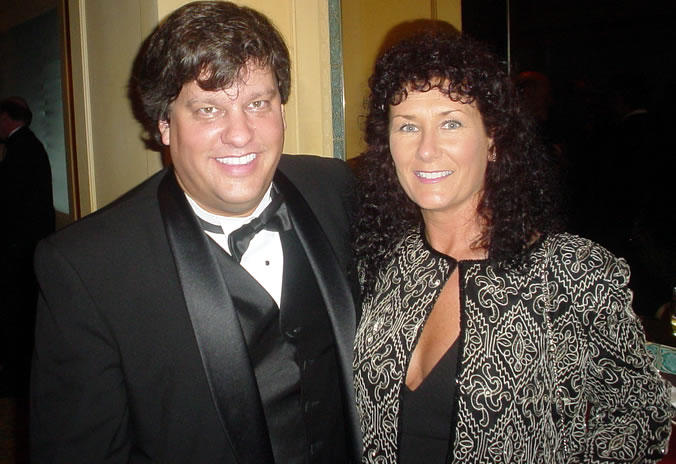 Black Tie Event, October 2005 - Missy and Bert at the Paramount Theater, Charlottesville VA
WVPT-Virginia's Public Television as Media Sponsor for A Night with Michael Feinstein and Linda Eder
 Missy and Cindy Maltby, JWOD Program Manager at US Department of the Interior, during JWOD Day, October 2005
Missy and Staff with the JMU Marketing Interns at Friendship's 40th Anniversary Celebration, April 2005

Missy at work, April 2005

Missy with some of Friendship's management team at the 40th Anniversary Celebration, April 2005

Missy speaks with a prospective new customer at DMAW's Association Day, October 2004

Missy with friend, Barney, at PBS Development Conference, Orlando FL, September 2004

September 2004

WVPT at the Massanutten Bluegrass Festival, Missy and Barbara Roadcap help sell beer tickets to raise money, September 2004

Missy and Bert support FundFest in downtown Harrisonburg, July 2003
Missy's Photo Album - Friends
Facebook and Twitter have taken over from my blogging here. For more pics, visit Facebook.

Visit Our Class Blog
http://centralhighschool1978.blogspot.com
Home of the "Fighting Falcons"
Friends Photo Album 2006
Friends Photo Album 2005
Friends Photo Album 2004
Friends Photo Album 2003
Missy's Photo Album - Family
Facebook and Twitter have taken over from my blogging here. For more pics, visit Facebook.
Family Photo Album 2007
Family Photo Album 2006
Family Photo Album 2005
Family Photo Album 2004
Family Photo Album 2003
Friday, January 07, 2005
Friends Photo Album 2005


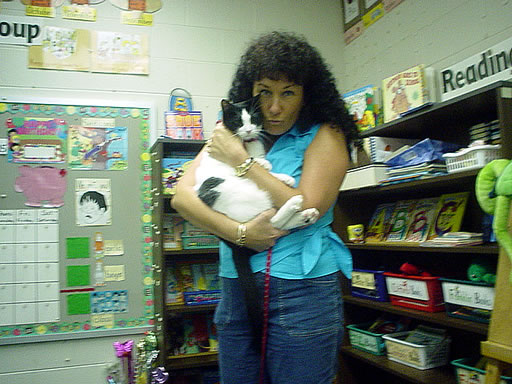
Missy in sister Tillie's Kindergarten class with her sweet kitty (named Bert!), July 2005

Jeff and Hee's Wedding in Korea, March 2005
Saturday, January 01, 2005
Family Photo Album 2005
http://www.frappr.com/schmidtfamily

Jillian struts her stuff, September 2005

Bertel is one cool dude, September 2005

Missy & Bert with Bertel and Jillian at Busch Gardens July 4th, 2005

Missy and Bert at the MOST (Museum of Science and Technology) in Syracuse NY, June 2005

Jillian gets flowers from dad at her dance recital, May 2005

During Bert's Kids Weekend - Missy and Jillian at Spaghetti Warehouse, Syracuse NY, April 2005
Subscribe to:
Posts (Atom)

 Posts
Posts